
Raw cashew nuts from Guinea-Bissau
What buyers need to know about Guinea-Bissau as a raw cashew nut (RCN) origin: where the crop grows, when the campaign opens, which quality parameters to check, and how a lot travels from the village to the Port of Bissau.
Updated · Bafata Agri Resources, SARL
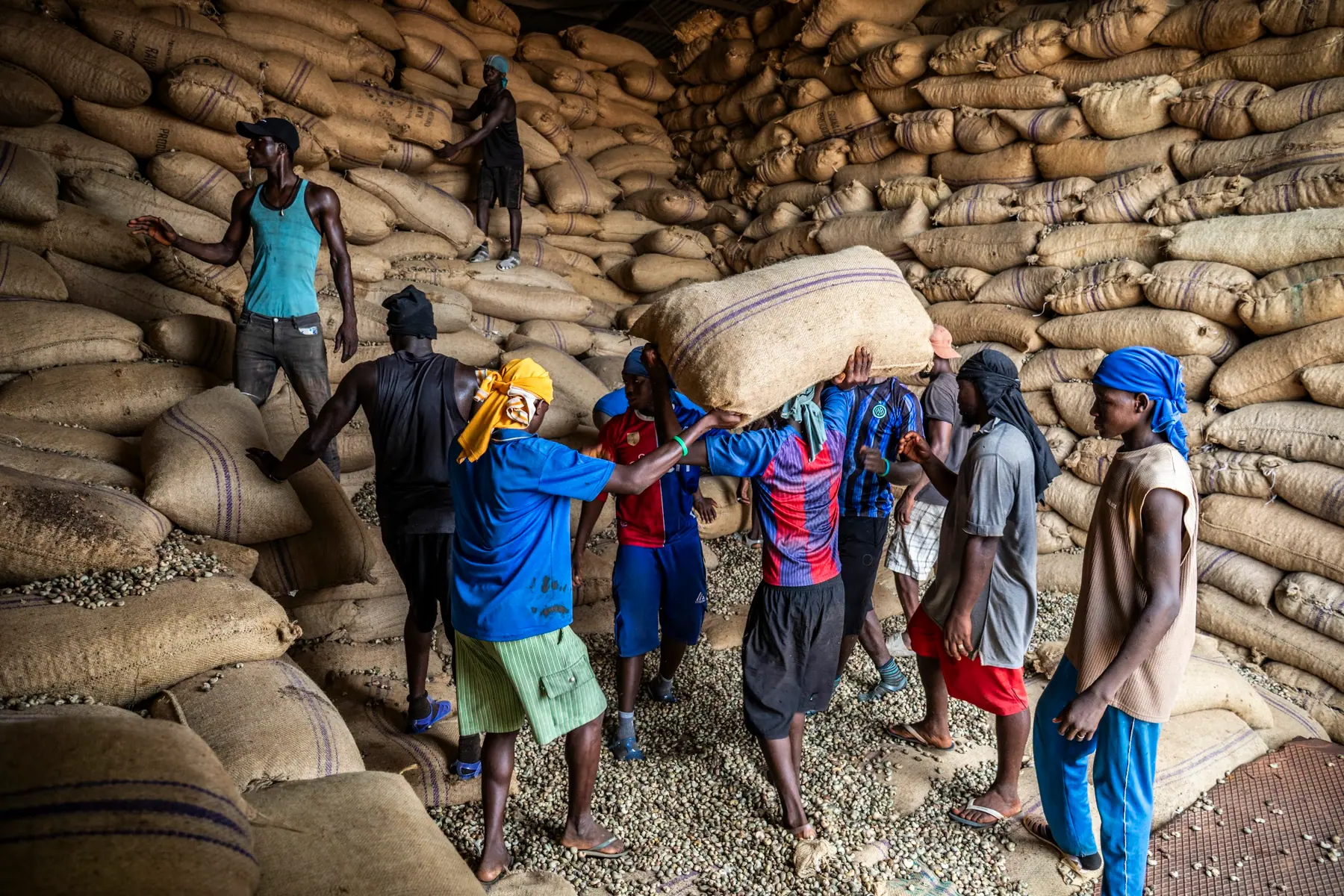
Guinea-Bissau as a cashew origin
Guinea-Bissau is one of the world's largest exporters of raw cashew nuts, and cashew is the backbone of its economy. The crop is grown by smallholder farmers across most of the country and sold at village level during the campaign.
Bafata Agri Resources buys in the regions of Bafatá, Gabú, Oio, Quinara, Cacheu. Lots are bought village by village, graded, stored and trucked to Bissau, where they are stuffed into containers and loaded at the Port of Bissau.
The 2027 Guinea-Bissau cashew campaign
- 1
Preparation — February 2027
Volume reservation, logistics planning and contract framing with buyers, before the season starts.
- 2
Official opening — April 2027
The government sets the reference price and village-level buying officially begins.
- 3
Buying, grading and haulage
Lots are bought, cut-tested, weighed, stored and trucked to Bissau as the campaign progresses.
- 4
Stuffing and loading
Containers are stuffed and loaded at the Port of Bissau against each buyer's contract and documents.
The gap between preparation and opening matters: buyers who wait for the official opening negotiate for what is left.
Quality parameters buyers check
- Outturn (KOR)
- Kernel outturn ratio: the weight in pounds of usable kernel recovered from an 80 kg bag of raw nuts. It is the main driver of value — the higher, the better.
- Moisture
- The water content of the nuts. Lower moisture keeps the lot stable in storage and during the voyage.
- Nut count
- The number of nuts per kilogram. The lower the count, the larger the nuts.
- Defective nuts
- The share of spotted, immature or damaged nuts found in the cut test.
- Foreign matter
- Stones, shells, dust and other material that is not cashew.
| Parameter | Target | Market | Our lots |
|---|---|---|---|
| Outturn (KOR) | ≥ 48 lbs | 44–48 lbs | 46–52 lbs |
| Moisture | ≤ 10% | 10–14% | 8–10% |
| Nut count / kg | ≤ 200 | 195–215 | 180–200 |
| Defective nuts | ≤ 10% | 10–15% | 6–10% |
| Foreign matter | ≤ 1% | 1–3% | < 1% |
Ranges reflect what Guinea-Bissau origin typically delivers across a campaign. Every lot ships against its own analysis — never against a brochure figure.
Where Guinea-Bissau raw cashew is shipped
Guinea-Bissau RCN feeds the world's cashew processing hubs. Our buyers are processors and importers in India (Kollam, Mangalore, Panruti), Vietnam (Binh Phuoc, Long An) and the United Arab Emirates (Dubai re-export traders).
We ship FOB Bissau, CFR, CIF, FAS from the Port of Bissau.
Frequently asked questions
When does the Guinea-Bissau cashew campaign start?
Guinea-Bissau's official raw cashew campaign opens once the government sets the reference price — for 2027, in April 2027, when village-level buying starts. Preparation opens earlier, in February 2027: volume reservation, logistics planning and contract framing. Buyers who wait for the opening negotiate for what is left.
What quality of raw cashew nuts does Guinea-Bissau produce?
Guinea-Bissau RCN typically delivers an outturn (KOR) of 46 to 52 lbs, moisture of 8 to 10%, a nut count of 180 to 200 per kilogram and defects under 10%. Every lot we ship is cut-tested and moisture-checked, and the analysis travels with the shipment.
What do KOR, outturn and nut count mean for raw cashew nuts?
Outturn, or KOR (kernel outturn ratio), is the weight in pounds of usable kernel recovered from an 80 kg bag of raw cashew nuts — the higher, the better. Nut count is the number of nuts per kilogram — the lower, the larger the nuts. Moisture is the water content of the nuts; lower moisture keeps the lot stable in storage and transit.